The three ways people end up collecting resumes, and where each breaks
- Email. Works for the first five applicants, then becomes six different file formats in a folder, no consistent subject line, and no way to tell who you already replied to.
- Google Forms.Structures the intake, but the file upload question requires the candidate to be signed in to a Google account, a real barrier that silently loses applicants who aren't, or are signed in to the wrong one. What lands is a spreadsheet, not a reviewable pipeline.
- A dedicated application form. Takes the resume upload without a login requirement, and gives every applicant a status you can act on rather than a row you have to manually track.
What actually matters in a resume-collection form
Two things decide whether a form collects resumes well: whether candidates can finish it without friction, and whether what lands on your end is something you can act on. A file upload that fails silently, or a login wall in front of it, costs you applicants you never even see. They just leave. And a spreadsheet full of resume links with no status column means you are doing candidate tracking by memory.
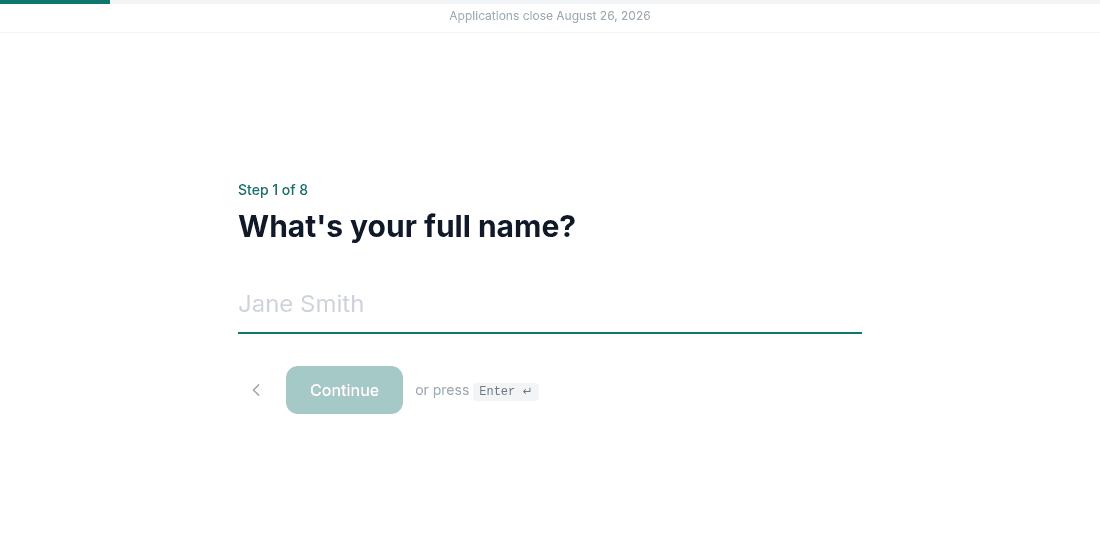
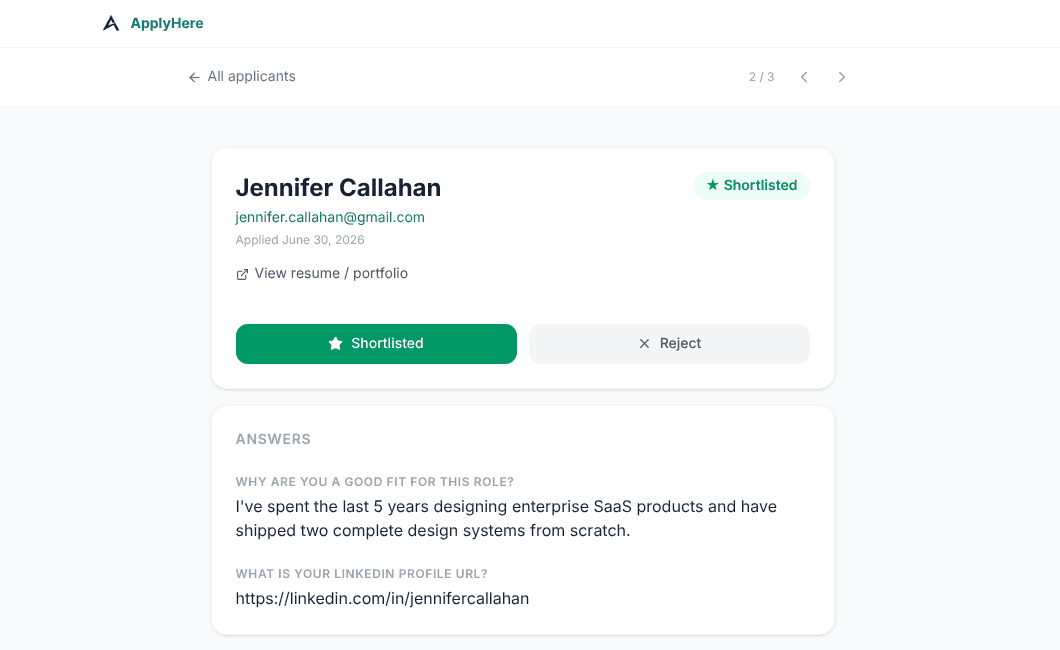
ApplyHere's form takes the resume upload with no account required on the candidate's side, and every submission lands with a status you control (New, Shortlisted, Rejected), so the review process is built in rather than something you build afterward in a spreadsheet.
What to add beyond the resume
A resume alone tells you what someone has done, not whether they fit the role in front of you. A couple of targeted screening questions (expected salary, availability, a scenario specific to the job) sit right alongside the upload in the same form, so you are comparing answers, not chasing them down separately by email after the fact.