Why the bill from Indeed keeps climbing
Indeed's Sponsored Jobs run on a cost-per-click auction: you set a budget, and you are charged every time someone clicks through to your listing, whether or not they apply. Clicks run anywhere from about $0.10 in low-competition markets to $5.00 or more for competitive tech and healthcare roles, and since mid-2025 Indeed enforces a $25-per-day minimum spend on every sponsored job. A single listing for a contested role can run into the hundreds of dollars before you have interviewed anyone, and the price moves with demand you don't control.
The deeper issue isn't the price, it's what you are paying for: clicks, not qualified applications. A large share of that spend goes to people who bounce off the listing without ever starting a form.
What actually replaces Indeed for a small team
No single channel replaces Indeed's reach one-for-one. What works is combining a few free or near-free channels with a form that doesn't leak applicants:
- Your own network and a personal LinkedIn post. Personal posts consistently outperform company-page posts in organic reach, and cost nothing but the time to write one.
- LinkedIn's free job listing.Every company page gets one free listing at a time. It won't get the algorithmic push of a paid Job Slot ($200–$1,000/mo) or promoted post ($7–10/day), but for professional and office roles the organic reach is real.
- Wellfound, if you are a startup. The candidate pool is self-selected for early-stage roles. Free tier is sufficient for most small teams; paid sourcing starts around $299/month.
- Craigslist, for hourly and local roles. $10–$25 per listing depending on city. Application quality varies, but for trades, food service, and retail it still produces volume.
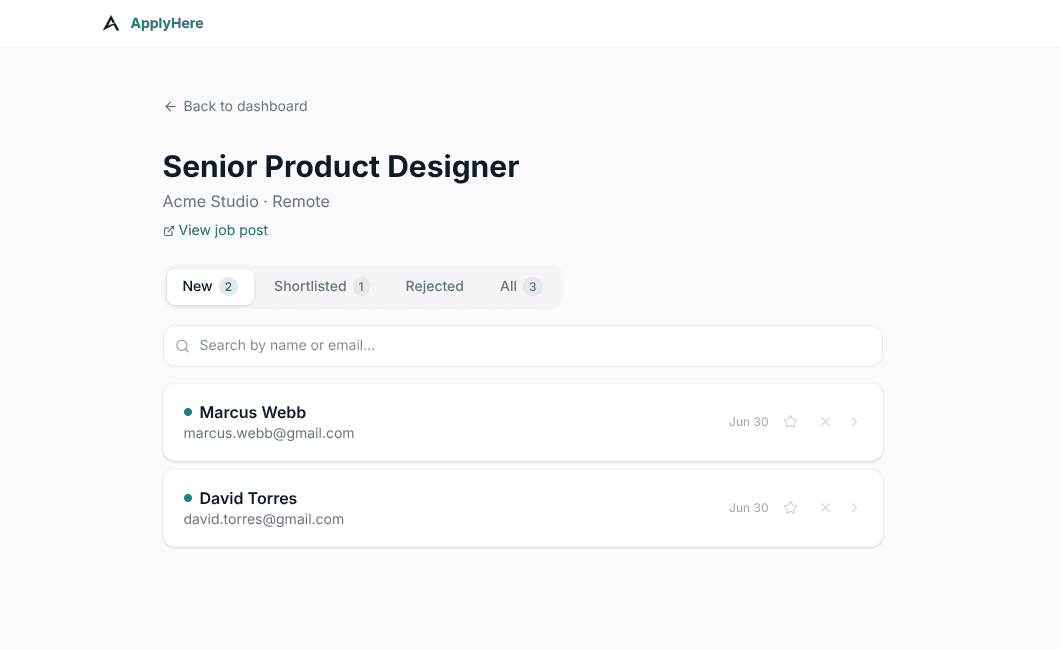
What ties those channels together is where the applicant lands. A dedicated application link means every channel feeds the same dashboard instead of scattering applicants across an inbox, a DM, and a comment thread.